Lumine Shinjuku
Physical Motion Graphic Installation
A kinetic installation bringing digital motion graphics into physical realm through 256 independently actuated panels at Lumine Shinjuku.
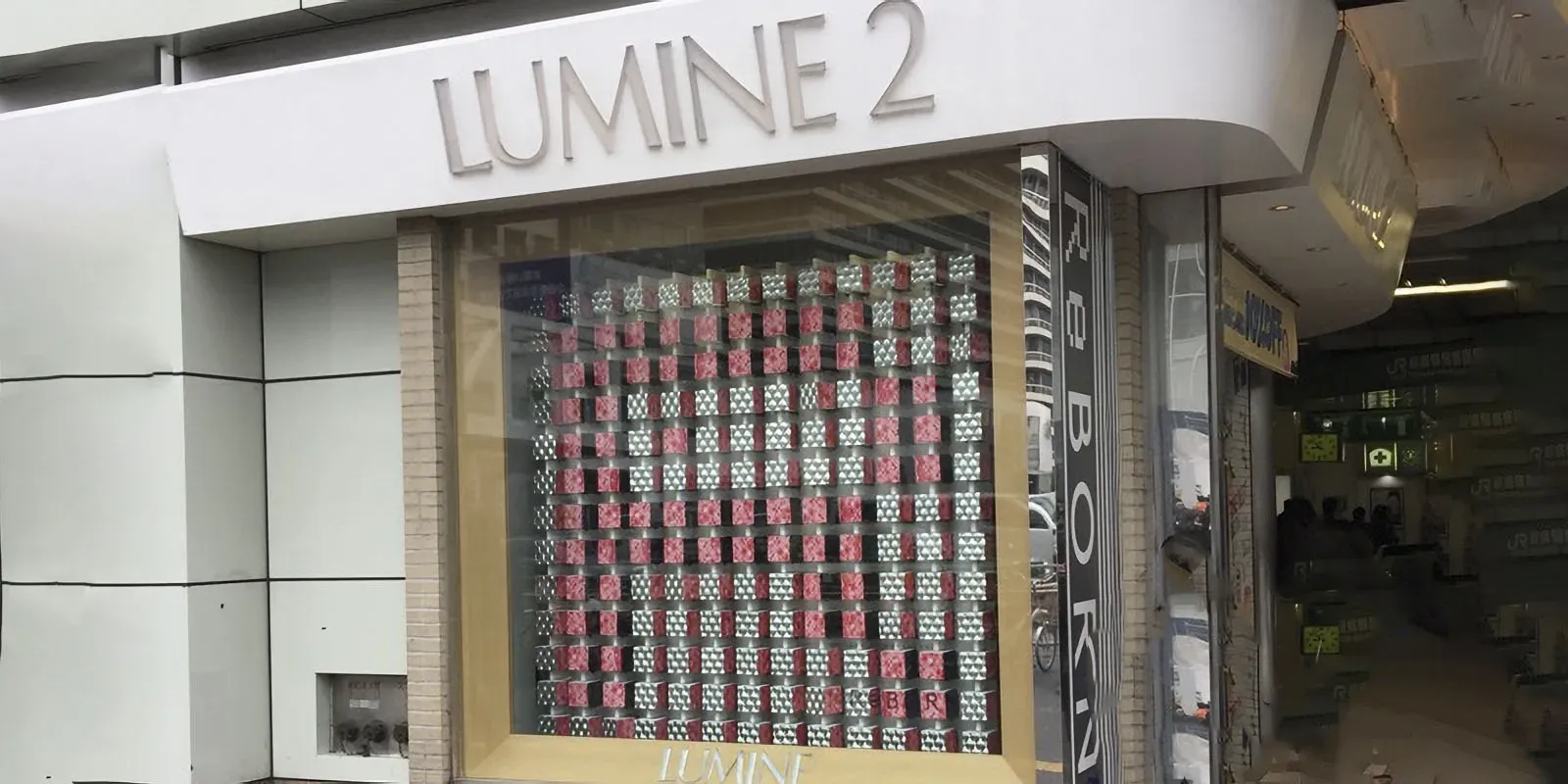
A kinetic installation that brings digital motion graphics into physical realm through an array of independently actuated panels. This installation explores the intersection of computational animation and mechanical movement, creating a mesmerizing visual experience where light and motion are controlled by 256 servo motors.


Concept
Physical Motion Graphic transforms digital motion graphics into tangible, physical form. The installation consists of an array of square panels, each independently actuated by a servo motor that can pivot the panel up or down. By controlling the angle of each panel, the installation manipulates reflected light to create dynamic visual patterns, effectively making individual panels appear lighter or darker.
This work challenges traditional boundaries between digital and physical media. What is typically rendered as pixels on a screen becomes manifested as mechanical movement in three-dimensional space, creating a unique viewing experience that bridges virtual and physical realities.
Technical Implementation
The installation is powered by a network of 256 servo motors arranged in a grid pattern. Each servo controls a single reflective panel, allowing for precise control over light reflection. The system uses multiple microcontrollers to orchestrate the simultaneous movement of all servos, enabling smooth animations that flow across the entire array.
The control system processes animation data in real-time, converting digital motion graphics into servo position commands. This creates a seamless translation from computational animation to mechanical movement, with each panel responding independently to create complex visual patterns that emerge from simple rules.
Venue
Lumine Shinjuku is one of Tokyo’s premier shopping complexes, located in the bustling heart of Shinjuku. The installation engaged a diverse audience of shoppers, tourists, and art enthusiasts during its exhibition from June 20 to July 14, 2019.
The public setting allowed the installation to reach thousands of viewers who might not typically seek out digital art in galleries. This accessibility aligns with the work’s goal of breaking down barriers between digital art and everyday public spaces.
Collaboration
Created in collaboration with Studio Abacus, a multidisciplinary design studio specializing in interactive installations and kinetic art.